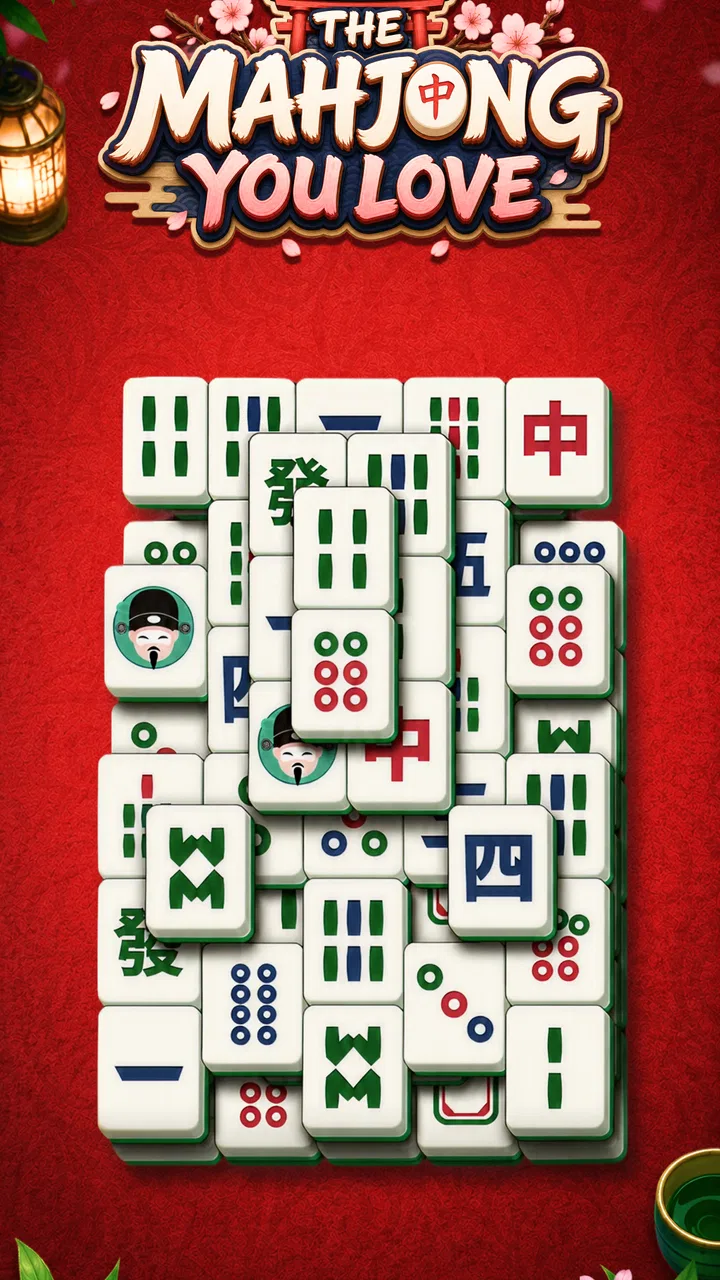
Mahjong Empire: Classic Match
- 5.0
- Rating
- 100.00K
- Installs
- Free
- Price

 Analysis by App-foxy
I spent time with Mahjong Empire: Classic Match as a quiet, pick-up-and-play board game, and its strongest idea is easy to understand: it turns Mahjong Solitaire into a routine of short visual puzzles with daily brain challenges. That focus matters more than it may sound. Instead of asking me to learn a complicated rule set or manage a large strategy system, it gives me a board, matching decisions, and a reason to return when I have a few spare minutes.
Developed by PlaySimple Games, the game is free to start and aimed at Everyone. It runs on Android devices using version 8.0 or later, so it is accessible on many phones and tablets that are no longer brand new. The current version is 1.14.0, and the game has already passed 50 thousand installs. Its average rating sits at 4.8 from more than 600 ratings, which suggests that the calm puzzle format is connecting with its audience, although the smaller review count means I would treat that score as encouraging rather than definitive.
Why the daily challenge is the game’s real strength
The central capability here is not simply matching identical tiles. It is the way a daily puzzle can turn a familiar board format into a small mental appointment. In ordinary Mahjong Solitaire, I can play until I feel finished, close the game, and forget where I left off. A daily challenge gives the session a clearer shape: I have one particular puzzle to consider, solve, and mentally put aside.
You May Also Like

 Blood Strike: 2.5 Anniversary
Blood Strike’s Loadouts Turn Every Drop Into a Tactical Gamble
A close look at Blood Strike’s custom loadouts: how fast access to signature weapons reshapes its battle royale rhythm, rewards preparation, and narrows the gap between fights.

 Pandora - Music & Podcasts
Pandora’s Music Is Easy to Start, but Harder to Recover
Pandora’s strength is its low-effort path from a seed to a station. Its weak spot is how much confidence it asks you to place in connection, setup, and quiet recovery.

 8 Ball Pool
 Is Built on Rivalries, Rematches, and Routine
A close look at the rivalries, rematches, shared routines, and unanswered safety questions that turn a quick pool match into a persistent mobile community.

 Samsung Music
’s Quiet Strength Is Playing What You Already Own
Its reach comes less from spectacle than from dependable access to a personal library. That simplicity is both the app’s strongest retention engine and its ceiling.

 AccuWeather: Weather Radar
AccuWeather Review: A Quick, Clear Forecast for Everyday Decisions
For everyday plans, the best forecast is the one you can understand quickly. AccuWeather makes rain timing, radar, and local conditions easy to act on, with a few trade-offs.

 Hill Climb Racing
Why Hill Climb Racing Still Turns Crashes Into One More Run
A tiny car, a bumpy hill and one more upgrade: Hill Climb Racing keeps resurfacing because its simple chaos makes every near-miss feel personal.
More From Our News Desk



That structure makes the game especially suitable for people who want a relaxing activity with a little concentration behind it. I do not need to reserve a long block of time, understand a story, or compete with another player. I can open it while waiting for a bus, during a coffee break, or at the end of the evening when I want something more engaging than scrolling but less demanding than a full strategy game.
The phrase “brain challenge” should not be interpreted as a formal training program. What I experience is practical visual planning: I look for exposed matching tiles, judge which pair to remove first, and try not to create a dead end. That is enjoyable mental work, but it remains a casual board-game activity. The appeal comes from attention and pattern recognition, not from a promise that the game will transform my memory or intelligence.
What I actually do on a board
Mahjong Solitaire is built around a simple restriction: a tile is useful only when it is available to select. Matching two visible tiles is easy when the board is open, but the more interesting decisions arrive when one move exposes several possibilities. Removing one pair may reveal a valuable tile underneath, while another pair may clear a side and give me more room later.
That makes the daily format more thoughtful than tapping the first matching pair I notice. I learned to pause before every comfortable move and scan the board for blocked tiles. The best choice is not always the pair that disappears immediately. Sometimes it is the pair that opens a crowded section or preserves a rare match for a later turn.
This is one of the game’s less obvious strengths: it rewards a repeatable visual routine. I first check the top layers, then the edges, then the spaces where a tile may be covering another. After that, I compare the available pairs and choose the move that creates the most future options. That workflow is useful for new players because it replaces random tapping with a manageable method.
How the daily rhythm feels in practice
In use, the daily challenge works best when I treat it as a contained puzzle rather than an obligation. I can approach it with a fresh mind, make a few careful matches, and stop when I have had enough. If I return later, the value is not just that another board is waiting; it is that the game gives my attention a familiar place to settle.
The relaxing tone also changes how I respond to mistakes. In a faster arcade game, a poor move can feel like a punishment. Here, a bad decision is more often a reminder to slow down and inspect the remaining layout. That makes the game friendly for someone who likes puzzles but dislikes timers, reflex tests, or noisy competition.
My practical tip is to avoid using the daily puzzle as background tapping. If I play while watching a show, I miss the planning that gives the game its identity. The better experience comes from giving the board a few uninterrupted minutes, especially near the beginning when a single careless match can reduce the number of useful choices later.
Another useful habit is to search for pairs before committing to a move. I look for matches that are currently available, then identify which of them are supporting other tiles. This is more reliable than clearing the most obvious pair. It also makes the game feel less luck-based, because I can see how a decision changes the shape of the board.
A realistic everyday use case
Imagine finishing lunch with ten quiet minutes before returning to work. A large adventure game would be inconvenient because it may require a story checkpoint or a longer session. A competitive board game might create pressure to finish a match. This game fits that gap better: I can open a puzzle, focus on a few deliberate moves, and put the phone away without feeling that I have abandoned a complicated campaign.
The same applies at home when I want to wind down. I can play one board while listening to quiet music, using the matching process as a gentle transition between a busy day and sleep. I would not call it a sleep aid, and bright screens are still bright screens, but the low-pressure design is less stimulating than many action-oriented alternatives.
For families, the Everyone content rating makes the game broadly approachable. Still, younger players may need help understanding why a visible pair is not always selectable or why a move can make the remaining board harder. That small teaching moment is actually worthwhile: the game can introduce planning without requiring a long explanation of rules.
Where it sits beside other board-game choices
Compared with traditional Mahjong games that focus on four-player competition, this is a more solitary experience. I am not managing a hand, reading opponents, or calculating points against people at the table. That makes it easier to start and less socially demanding, but it also means I miss the tension and variety that come from competing with real players.
Compared with Sudoku, the challenge is visual and spatial rather than numerical. Sudoku rewards deduction through fixed number relationships, while this game asks me to manage access, layers, and matching opportunities. Someone who enjoys scanning shapes may find this more natural than a number grid; someone who wants a puzzle with a single provable solution may prefer Sudoku’s stricter logic.
Compared with match-three games, the pace is calmer and the board decisions feel more deliberate. Match-three games often encourage quick reactions and chain-building, whereas Mahjong Solitaire gives me time to inspect the layout. The trade-off is that it may feel too quiet for players who need constant animation, escalating action, or a strong sense of spectacle.
The friction behind the free entry point
The game is free, which removes the biggest barrier to trying it. It does include in-app purchases ranging from $1.99 to $49.99 per item. For me, that means I would approach the game as a no-cost casual pastime first and decide later whether any optional purchase genuinely improves my experience. A free download is convenient, but it does not automatically mean the complete experience is free of spending prompts.
This is also where the game may lose players who dislike monetization in puzzle apps. Even when I am happy to play without paying, the awareness of optional purchases can interrupt the otherwise peaceful mood. Anyone looking for a completely purchase-free board game should consider that preference before settling in.
The other limitation is repetition. The daily-challenge concept gives the game a dependable reason to return, but the basic activity remains matching tiles on layered boards. If I want a broad campaign, character development, deep tactical variety, or a changing set of board-game rules, this will probably feel narrow. Its strength is consistency, and consistency can become sameness when I play for too long in one sitting.
I also would not choose it when I need a social game. There is no substitute for sitting across from another person, discussing moves, or reacting to an opponent’s choices. This is better for private concentration than shared competition. That distinction should guide the download decision more than the attractive rating alone.
Small techniques that make the puzzles better
My first technique is to protect flexibility. When two different pairs are available, I prefer the move that opens a covered tile or widens a narrow side of the layout. A pair that merely reduces the visible count may be less valuable than one that changes the board’s structure.
My second technique is to inspect the board in passes. I scan for exposed pairs once, then scan again for tiles that became available after a match. This prevents me from making a move and immediately overlooking the new opportunity. It also keeps the session calm because I am following a process instead of guessing.
My third technique is to stop before frustration takes over. The game is most relaxing when I treat an awkward board as a puzzle to revisit, not as a test of personal ability. If I start tapping quickly, I usually make worse decisions. A short break can be more useful than forcing the next match.
These habits are not hidden power-ups or advanced systems; they are ways of getting more value from the game’s central mechanic. They also explain why the daily challenge can feel more satisfying than an endless stream of random boards. A defined puzzle encourages me to notice improvement in my own approach, even when the rules stay simple.
Who will enjoy it most
I recommend this game most strongly to people who want a calm, solitary board experience that fits into small pockets of time. It is a good match for visual puzzle fans, casual players returning to games after a long break, and anyone who prefers thoughtful taps over quick reactions. The daily format is particularly useful if you enjoy building a gentle routine around one manageable challenge.
It also suits players who want a game that is easy to explain. You do not need to teach a complex control scheme or remember a long narrative. The main learning curve is understanding availability and developing a habit of looking ahead. That makes the opening approachable while leaving enough room for better decision-making.
I would be more cautious about recommending it to players who need constant novelty. If your ideal board game includes multiplayer rivalry, elaborate progression, competitive rankings, or a wide range of mechanics, the focused Mahjong Solitaire format may not hold your attention. The same applies if optional purchases are a firm deal-breaker for you.
Device compatibility is straightforward for many Android users because the minimum requirement is Android 8.0. The game is free to begin, carries an Everyone age rating, and comes from an established developer in the casual-games space. Those details make it easy to try, but the real question is whether you enjoy the particular rhythm of looking, planning, matching, and repeating.
My recommendation after playing
What I like most is the balance between a familiar rule and a purposeful daily routine. The game does not need to reinvent Mahjong Solitaire to be useful. It gives the classic matching format a calm place in my day, and the daily challenge encourages me to return without demanding a long commitment.
My honest reservation is that the experience can feel limited if I expect more than focused tile puzzles. The free entry is welcome, but the in-app purchase range is worth keeping in mind, especially for players who prefer games with no spending pressure. I would also choose a multiplayer Mahjong title or a deeper strategy board game when I want social interaction or substantial long-term variety.
For the right player, though, the daily challenge is more than a repeatable task: it is a simple way to turn a few idle minutes into deliberate concentration. I would recommend Mahjong Empire: Classic Match to a friend who wants a relaxing board game, appreciates visual planning, and is comfortable with a focused format. I would suggest trying it free first, playing several short sessions rather than one long marathon, and deciding from that rhythm whether it earns a regular place on the phone.
FAQs for Mahjong Empire: Classic Match
01What features does Mahjong Empire: Classic Match offer?
Mahjong Empire: Classic Match offers a variety of features that enhance the classic tile-matching experience. Players can enjoy multiple game modes, including time-limited challenges and relaxing free play. The app provides customizable themes and backgrounds, daily puzzles, and a hint system to assist beginners. It's designed to cater to both casual players and Mahjong enthusiasts.
02Is Mahjong Empire: Classic Match suitable for beginners?
Yes, Mahjong Empire: Classic Match is beginner-friendly. It includes an intuitive tutorial that guides new players through the basics of Mahjong. The game also features a hint system to assist players who may be stuck. With different difficulty levels, beginners can gradually improve their skills and enjoy the game at their own pace.
03Does Mahjong Empire: Classic Match require an internet connection?
No, Mahjong Empire: Classic Match can be played offline. This allows players to enjoy the game anywhere without needing an internet connection. However, some features, such as daily challenges or leaderboards, may require internet access to update and sync your progress.
04Are there in-app purchases in Mahjong Empire: Classic Match?
Yes, Mahjong Empire: Classic Match includes in-app purchases. Players can buy additional themes, boosters, or hints to enhance their gameplay experience. While the game is free to download and play, these optional purchases allow players to customize their experience further and support the developers.
05How does Mahjong Empire: Classic Match handle user data and privacy?
Mahjong Empire: Classic Match is committed to user privacy and data security. The app collects minimal data necessary for gameplay and performance improvements. It adheres to strict privacy policies to ensure user data is not shared with third parties without consent. Players can review the app's privacy policy for more detailed information on data handling.
Pros
- Intuitive interface for easy navigation.
- Variety of tile sets to choose from.
- Engaging daily challenges enhance replayability.
- Smooth performance on both Android and iOS.
- Offline mode available for on-the-go play.
Cons
- Limited hints can frustrate beginners.
- Ads can interrupt gameplay experience.
- Occasional crashes on older devices.
- No multiplayer mode for social play.
- In-app purchases can be costly.

Mahjong Empire: Classic Match
Gallery